(Books for children)
Since I’ll be studying libraries and in particular how families use the library, I imagine I’ll be spending some significant time in children’s library spaces, so I figured I should get to know some children’s books. Unfortunately, my library doesn’t have too many that were originally written in Portuguese. I requested a few folk tales, especially as they might help with understanding the culture and references (the way Americans might refer to the sky falling or “and so she did” from the Little Red Hen story). Here are a few:
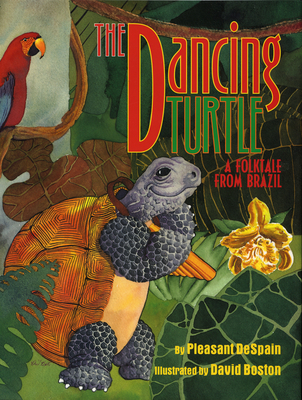
The Dancing Turtle: a folktale from Brazil by Pleasant DeSpain
Turtle loves to play her pan flute and dance. When she gets captured by a man, she tricks his children into letting her go by playing her flute and offering to show them her dance. Pleasant DeSpain seems to be one of those white writers who spend some time in another culture, are drawn to their stories, and write them down. On the one hand, I’m glad to be exposed to a whole world of stories without leaving my town, but on the other hand, sometimes these white writers get things wrong or sort of corner the market in a way that would best be handled by writers from that culture. It’s something we librarians as a profession need to be more aware of and it’s a phenomenon called #ownvoices.
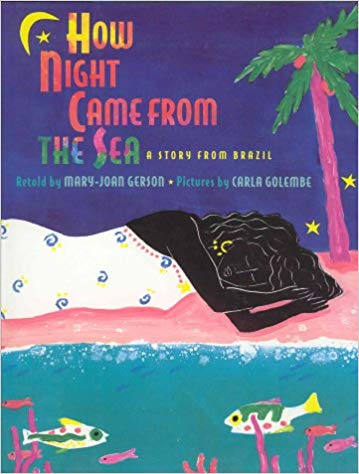
How Night Came From the Sea by Mary-Joan Gerson
Another white writer, this time retelling a fusion of African and Brazilian myths. This one is a how/why story of why we have day and night. Night comes from an African goddess of the sea whose daughter lives on land with her husband but gets exhausted by the light all the time, so her mother sends her the night creatures and then she can rest.
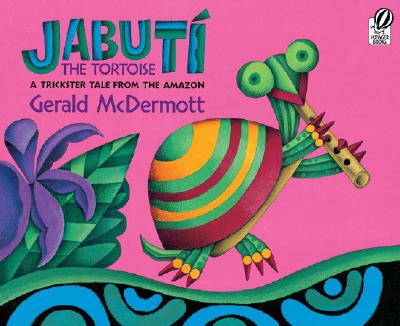
Jabuti the Tortoise by Gerald McDermott
Another trickster tale that is also a why/how story; also another one written by a white dude (here’s one perspective on critique of McDermott, if you’re curious – about his Caldecott win in 1975). Jabuti explains not only why turtle/tortoise shells are tiled, but also how some birds got their colorful feathers. Vulture agrees to give Jabuti a ride up to the party thrown by the King of Heaven, but he throws Jabuti off his back because he’s still annoyed about being tricked in the past. Jabuti falls to the ground and his shell shatters; the other birds come and help him get put back together and earn their colors.
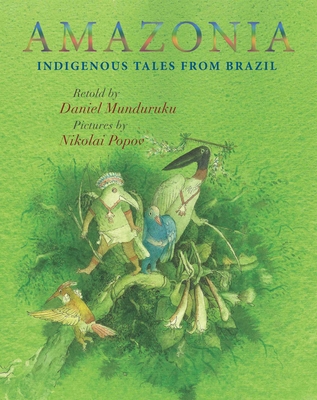
Amazonia: Indigenous Tales from Brazil, retold by Daniel Munduruku
This book does the best job of identifying the tribes of origin, which is perhaps not surprising as he is native himself. I also attribute the sense that the stories do not follow western storytelling patterns to the fact that they are authentically told. Some of these stories are how/why stories but some are harder for me as a non-Native person to follow. But I’ll keep an eye out for references to pequi and other foods, animals, and mythological characters while in Brazil!
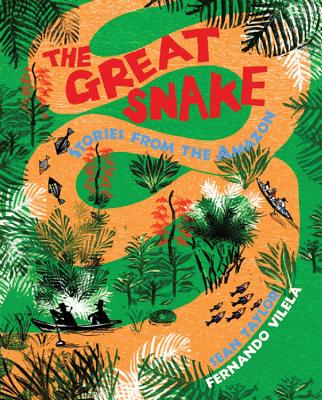
The Great Snake: Stories from the Amazon by Sean Taylor
This is one of the worst offenders in terms of not attributing the stories to the indigenous tribe. The most egregious to me was this part: “…the unique mix of people who live here – native Brazilians… Europeans… and Africans shipped to South America as slaves. Their stories have mixed, like paints, to make new colours. The next tale is an example of this mix.” (Notice a complete lack of the horror and trauma inflicted by Europeans in their domination of the other two.)
BUT I feel like the large number of stories gave me a good foundation for some key terms and ideas that I might hear about in Brazil, even just in passing. Jurutai (a bird – the story told how the Amazon River came to be), Curupira (a small red-furred yeti-type fellow who watches to make sure you don’t hunt or cut trees for sport or money), Mani (an enchanted possibly albino girl, whence comes the name manioc), and river dolphins appearing as handsome young men.
 Horntoes in Brazil